THE WORLD WAS ALWAYS FULL OF US
2025
Video 4K with surround sound 5.1. 29 min.
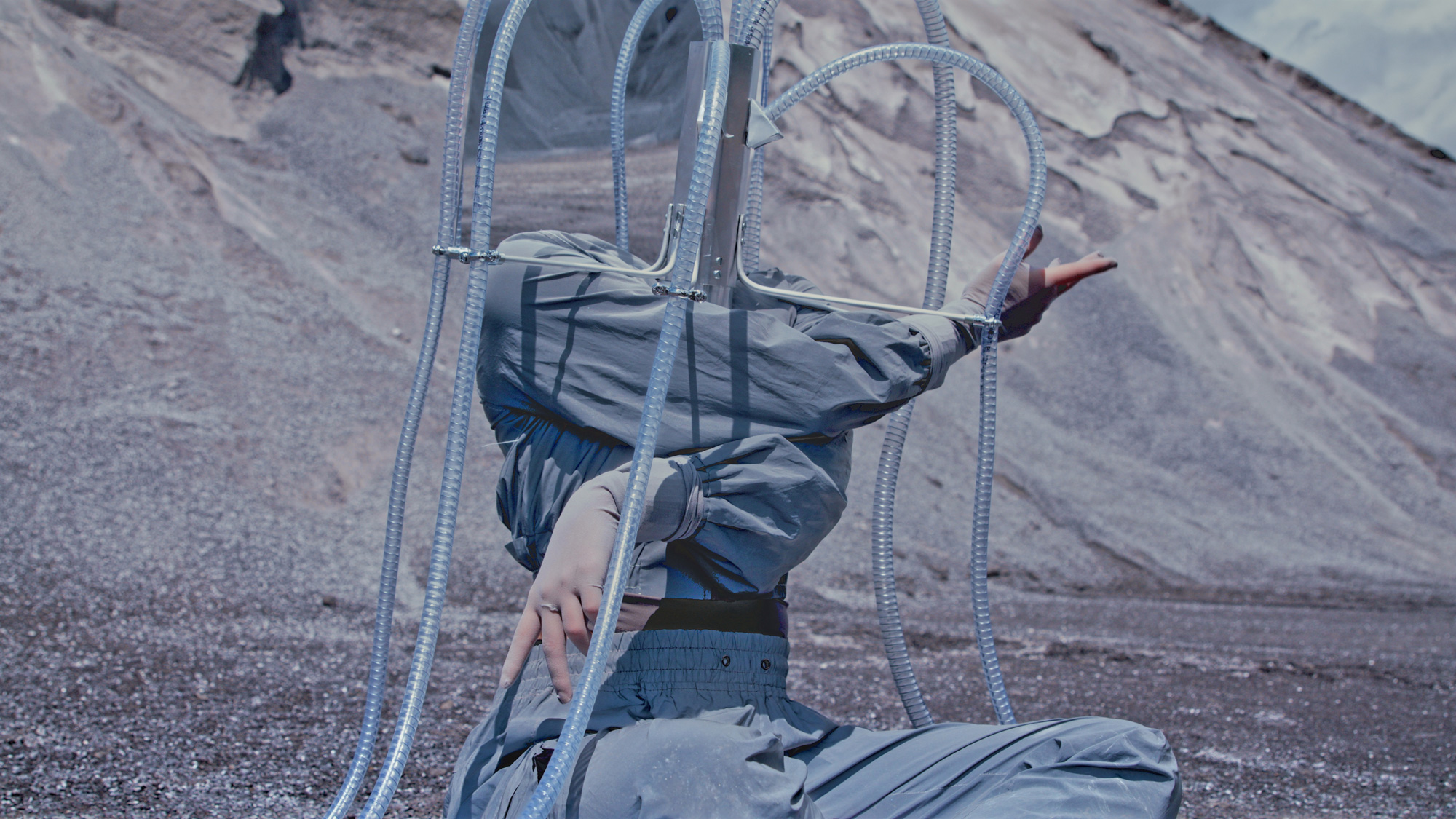
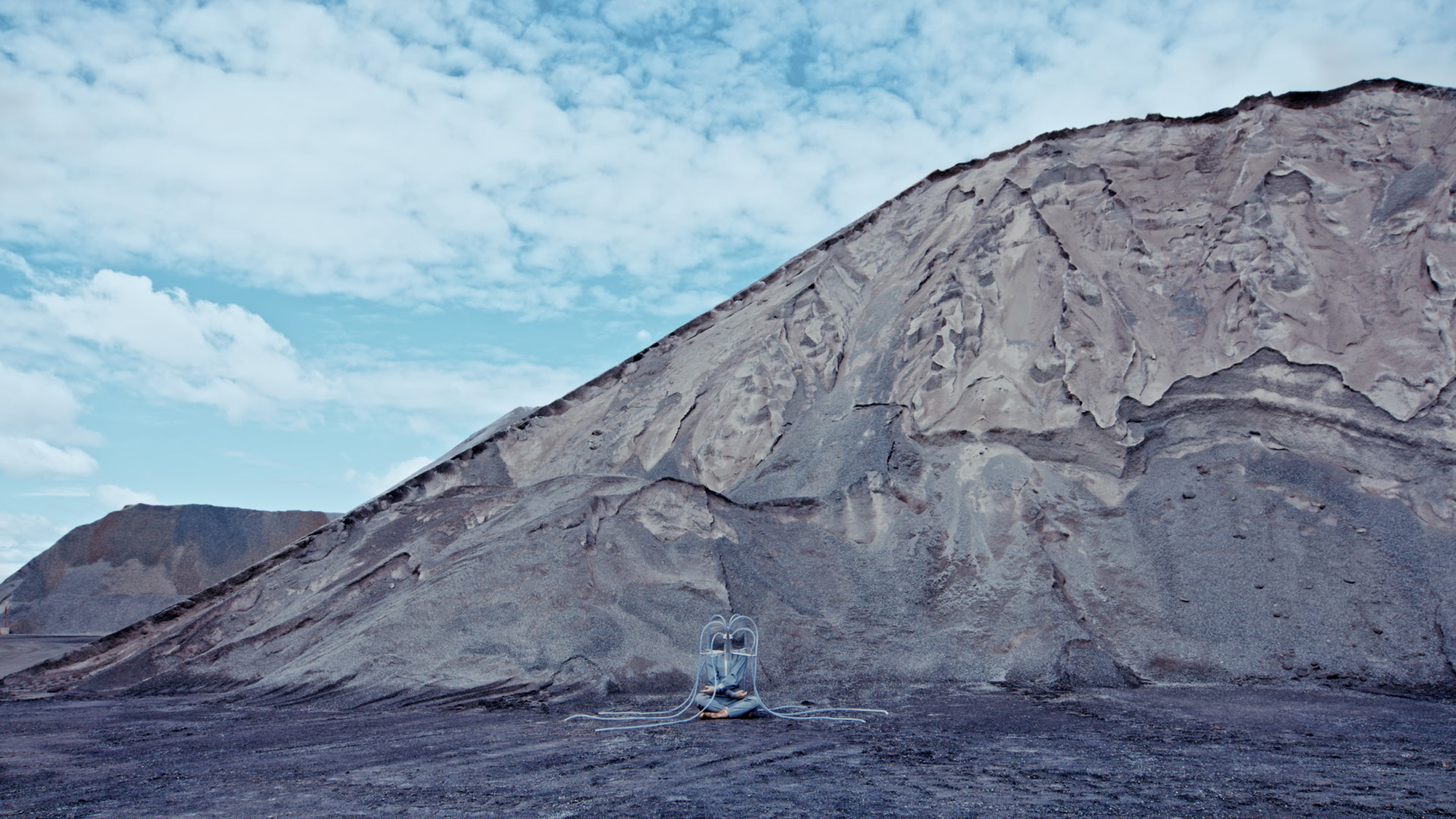
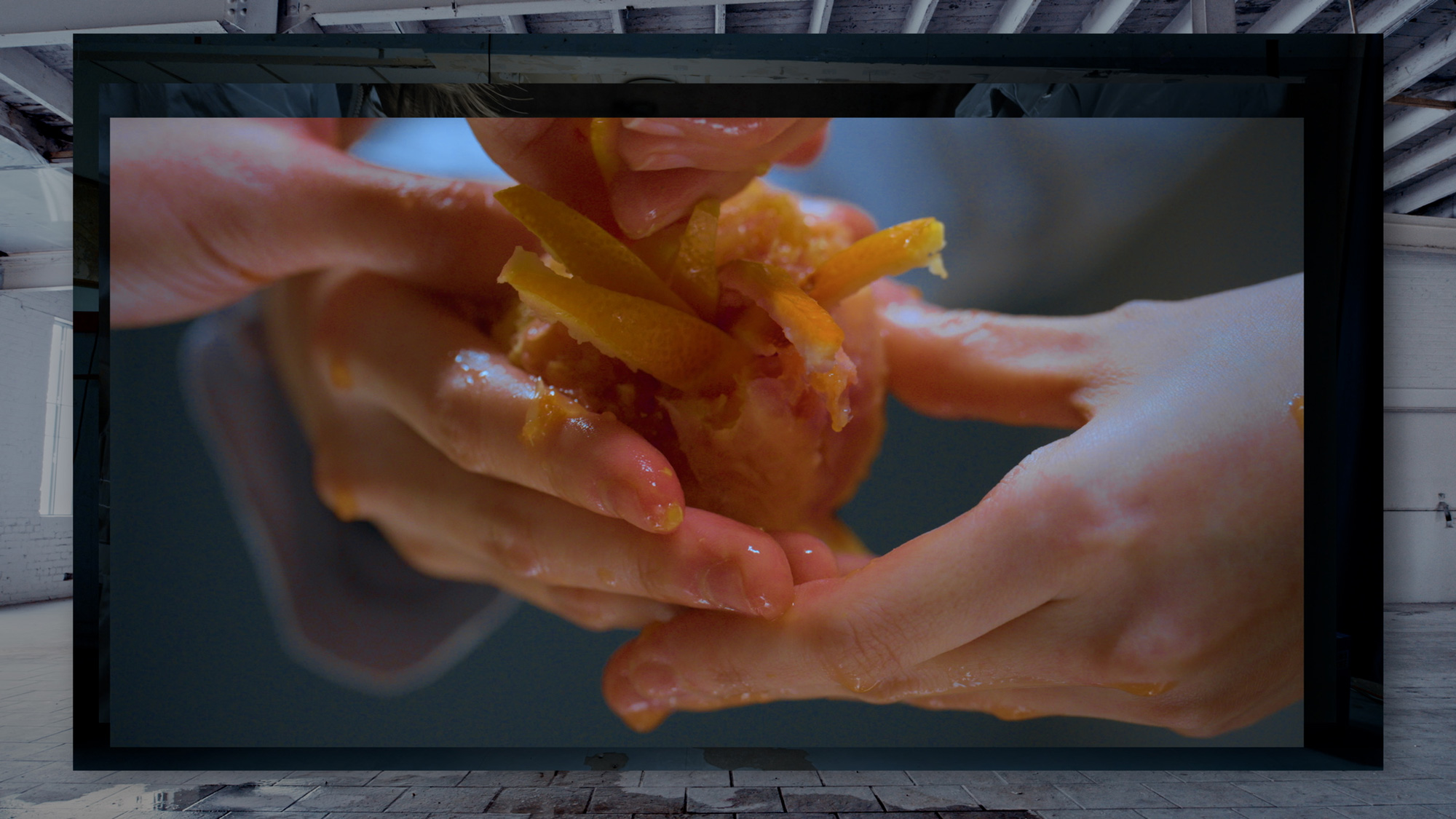
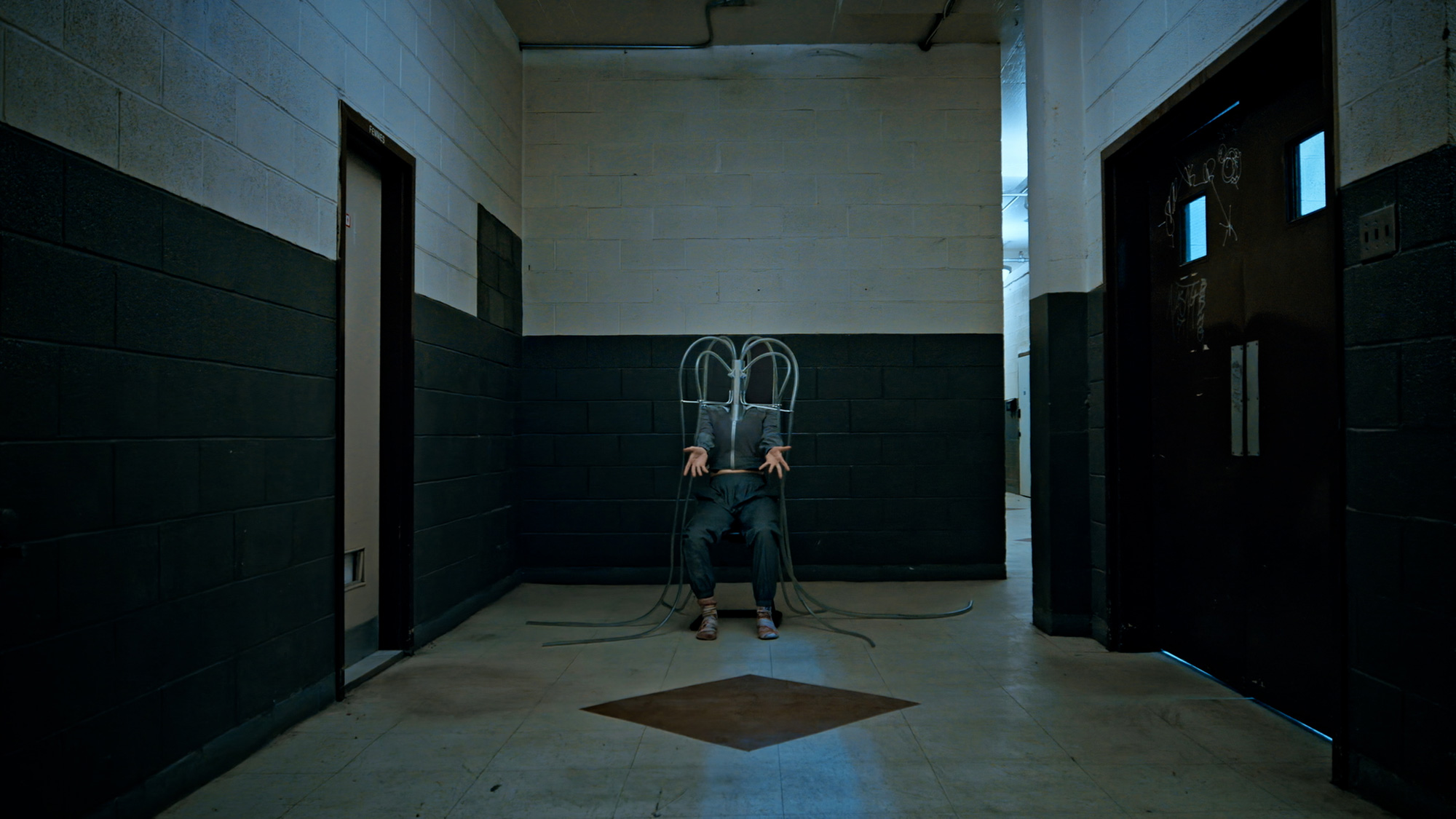
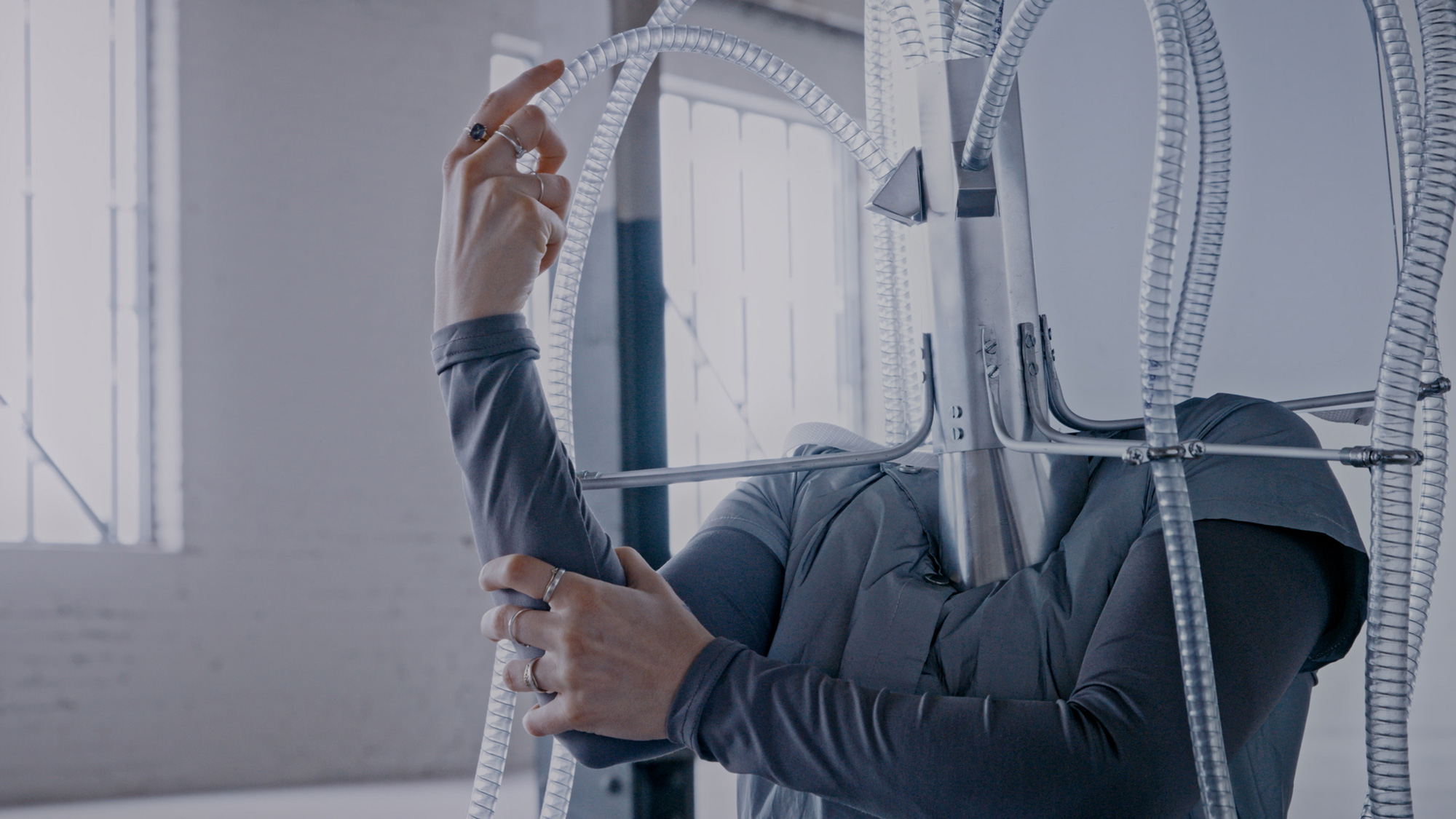
A headless cyborgian narrator introduces us to a community from the future that, every century, journeys through distant mountain ranges to meet with ‘the Apparatus’ and ask for guidance about their bodily pains. Each time, the Apparatus - rather than bringing them relief - sets in motion new myths that are passed down to ‘the Convincings’ to instigate and justify violent treatments.
The film The world was always full of us draws on dystopian feminist science fiction to explore the chronic womb-related pain experienced by women and non-binary people.
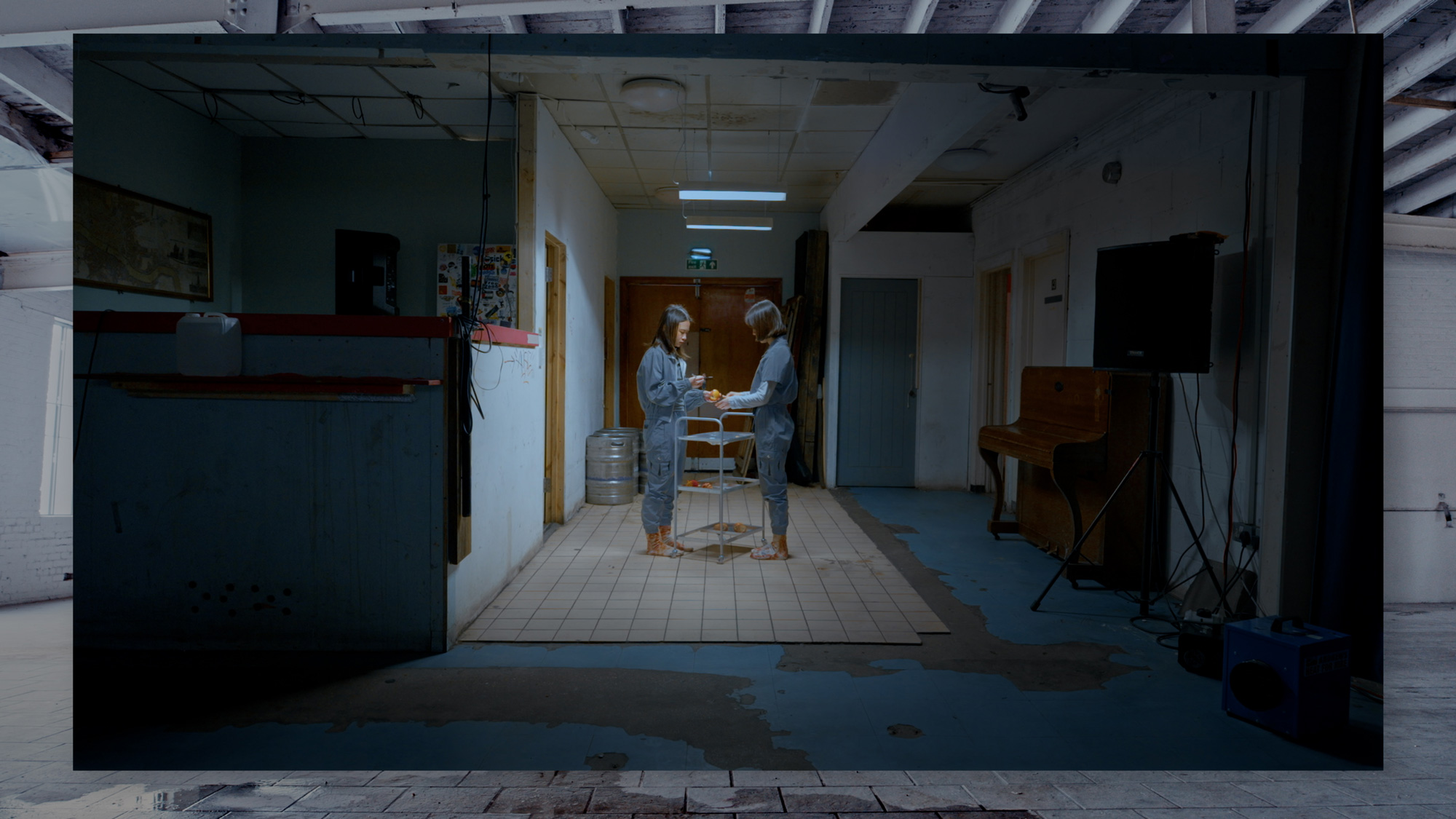
In a collage tracing four thousand years of dismissive medicine, the narrator takes us through three historical misdiagnoses of endometriosis: the ‘wandering womb’, ‘hysteria’, and the ‘working woman disease’ – describing treatments and recommendations through the borrowing of words pulled from medical archives from the Middle Ages to the 1950s.
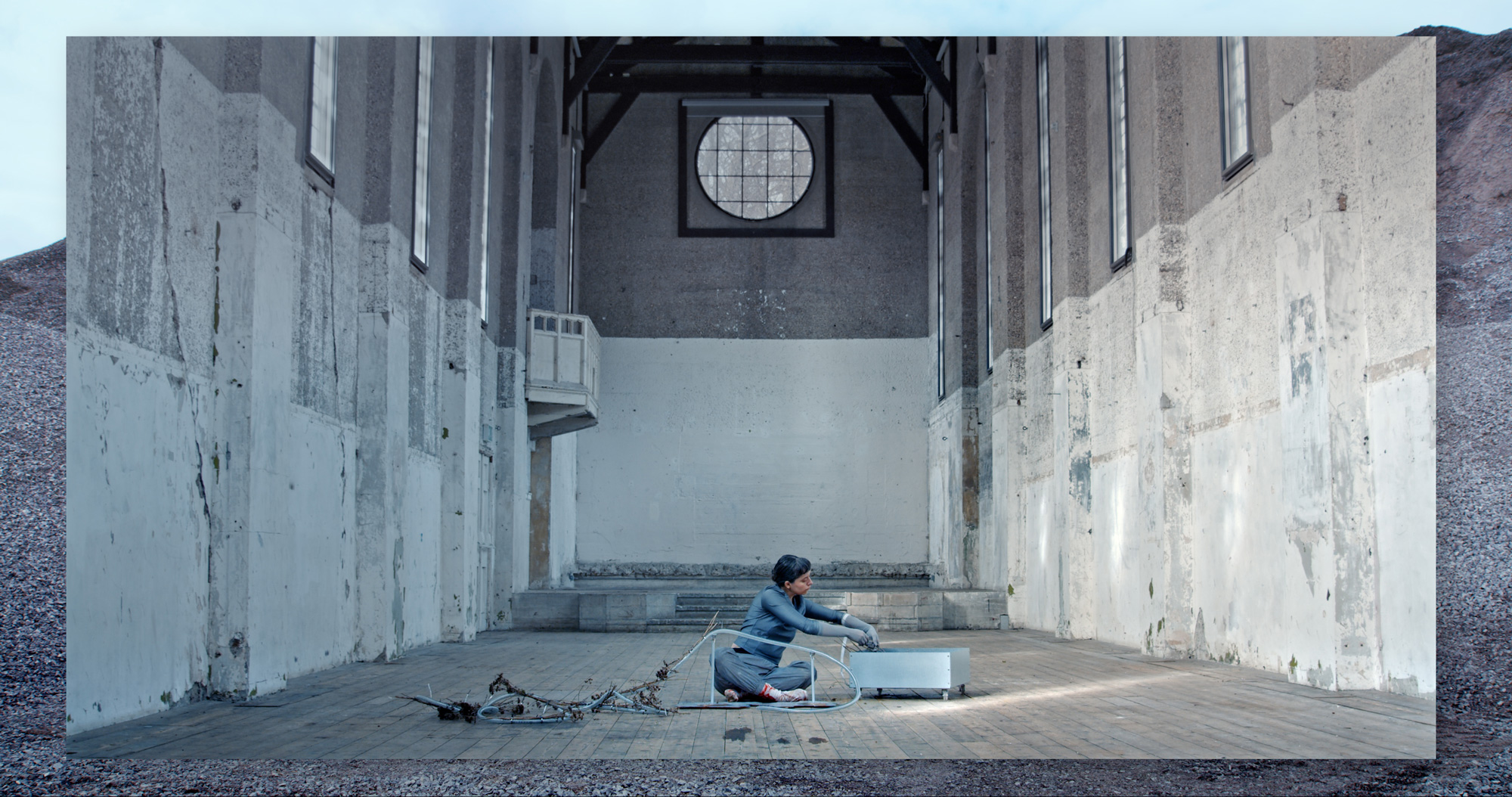
The dance sequences, collaboratively choreographed, are inspired by representations of sick, ill, and disabled women in art historical paintings and in optical illusion sideshows touring fairs in Europe. All seven dancers performing in the film live with such pain, and the making of this work allowed them to find a shared sense of community.
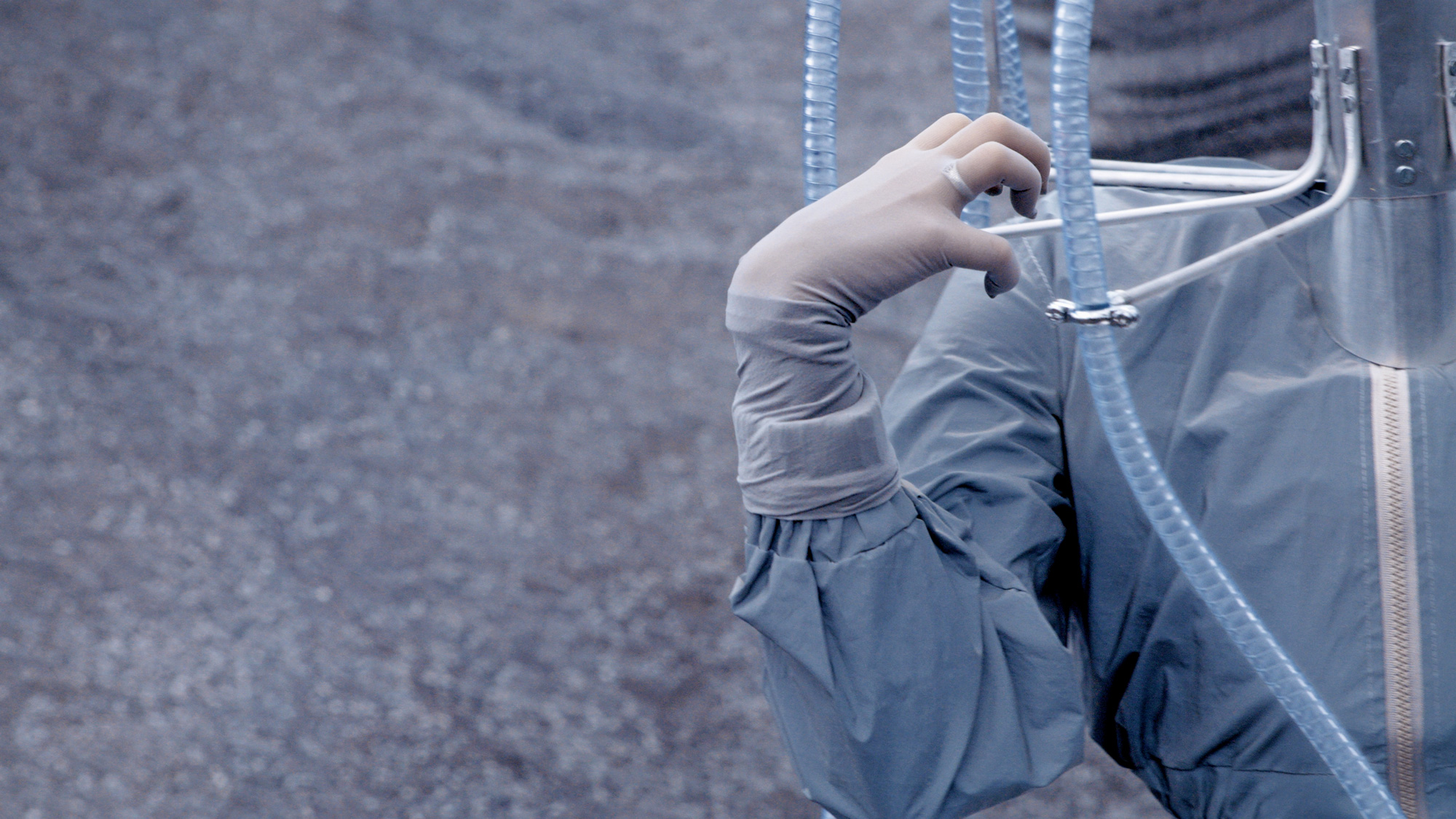
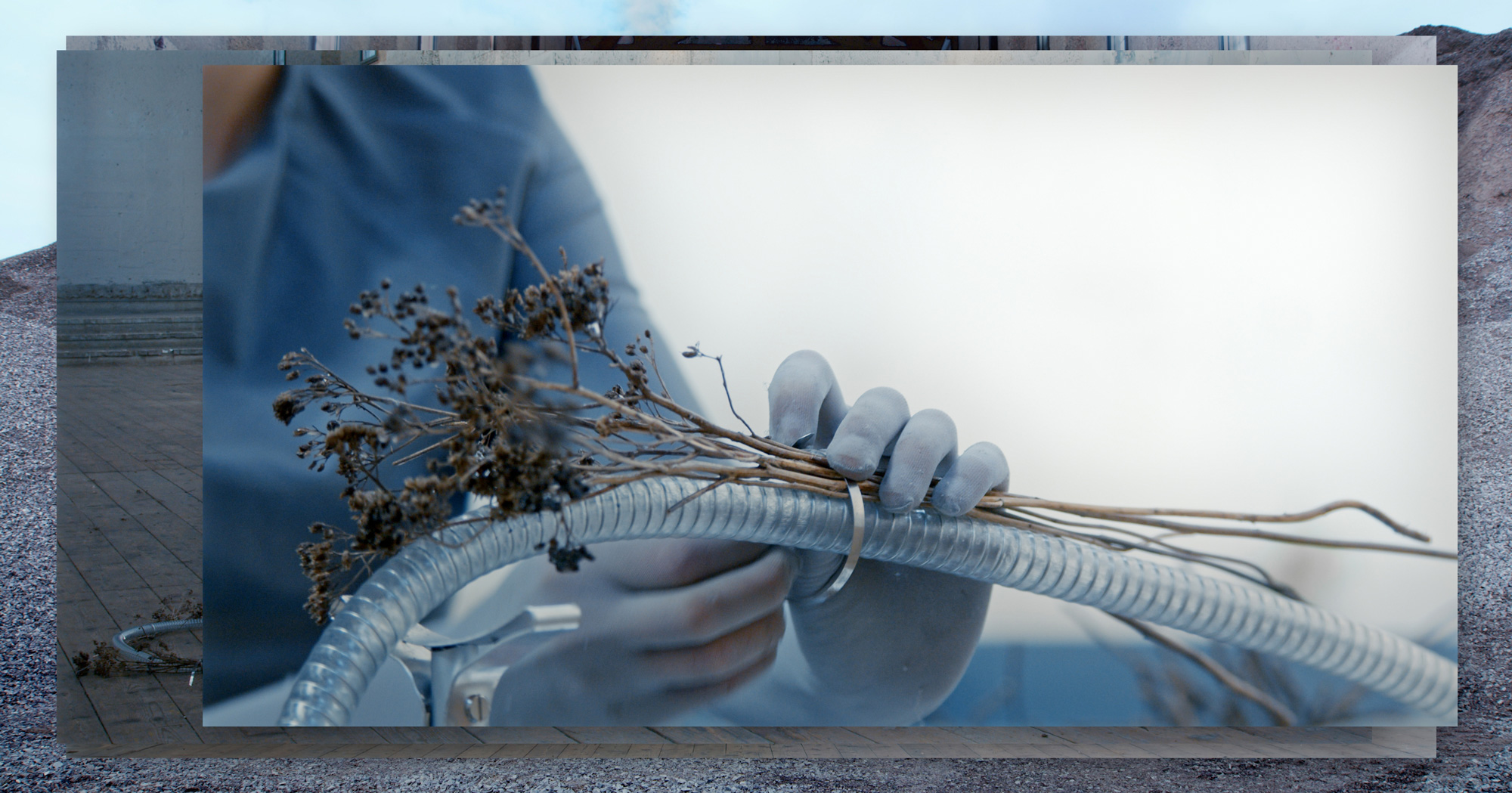
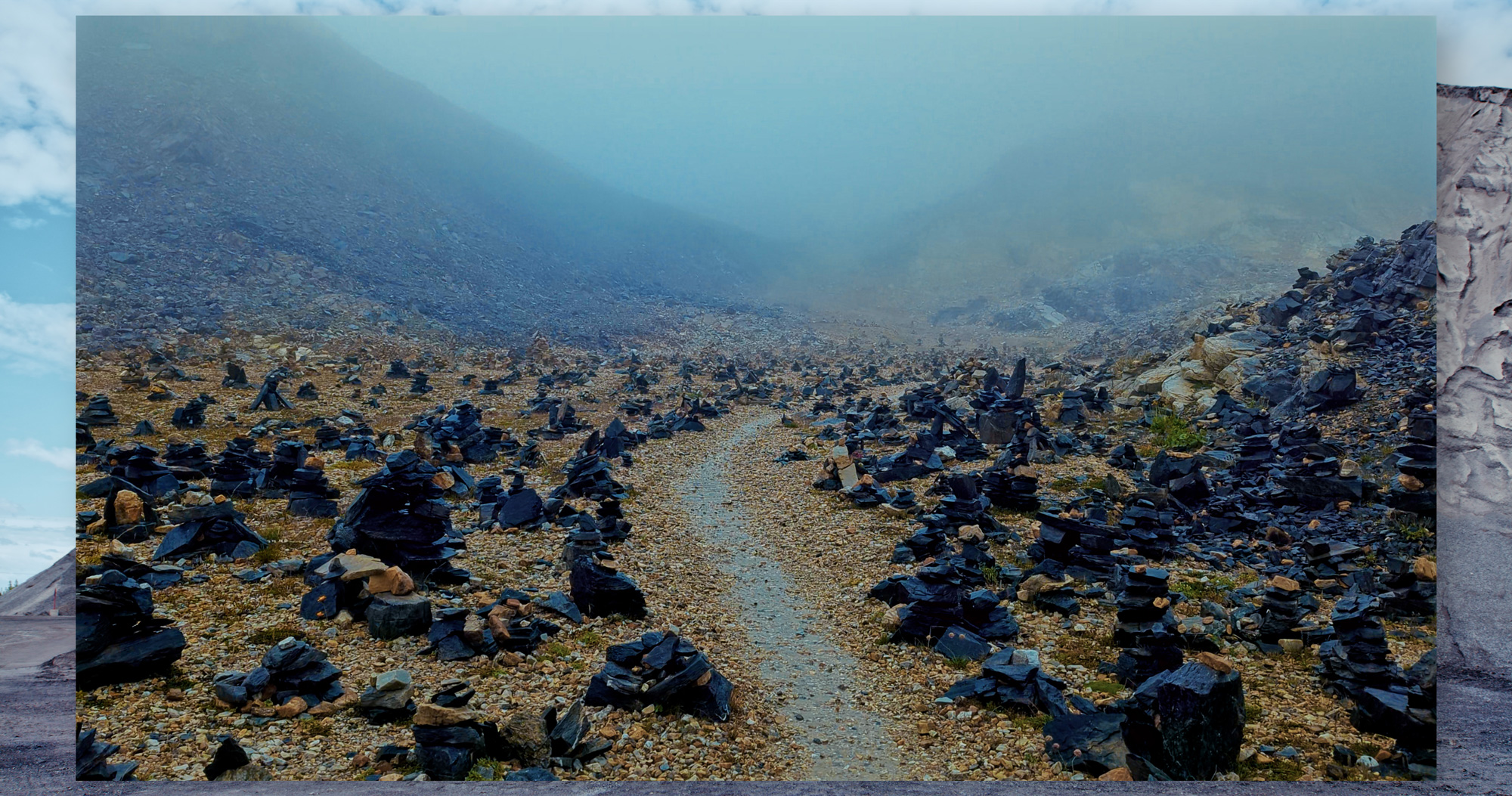
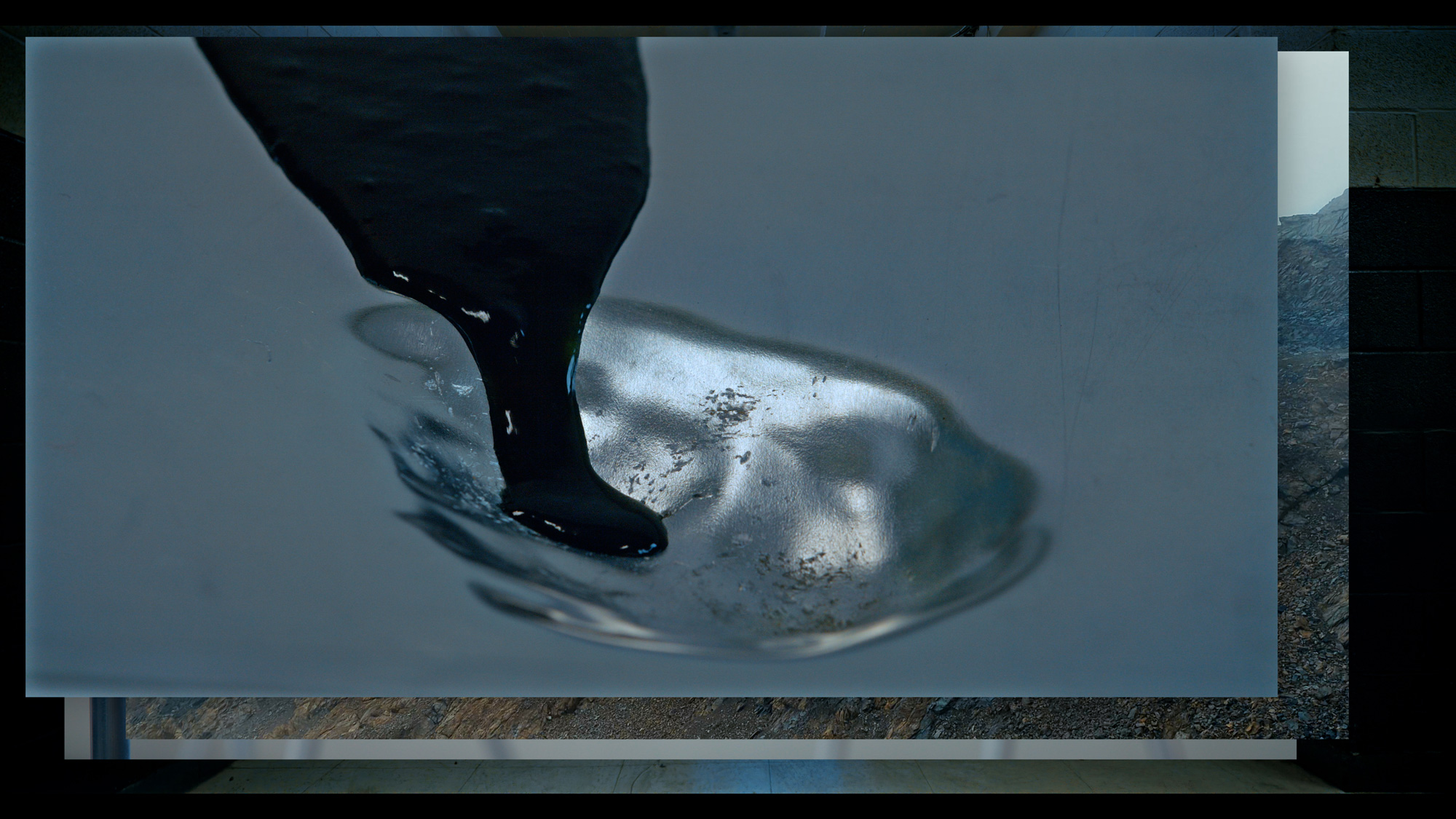
Throughout the film, rockslides act as metaphors for endometriosis, revealing how womb-holders' bodies are treated as a resource to be extracted and controlled. Symbols associated with fertility and psychiatry are tied, cut open, and turned inside out. In Verviers’s work, those dealing with pain have transformed themselves into feminist cyborgs - hybrid figures that have the power to act not only on their pain but, more importantly, with it.
This project was funded by the Conseil des arts et des lettres du Québec and the Canada Council for the Arts.
The artist received support from the PRIM-Dazibao Production and Exhibition Residency, the Smith Residency at Cove Park, and Southwark Park Galleries.
Write to me to receive a film screener link
AKNOWLEDGMENTS & CREDITS
Performance and Choreography:
Direction, Screenplay, and Editing:
Voice:
Cinematography:
Sound Recording:
Foley and Sound Mixing:
Music:
Color Grading:
Production Management:
Special thanks:
->